
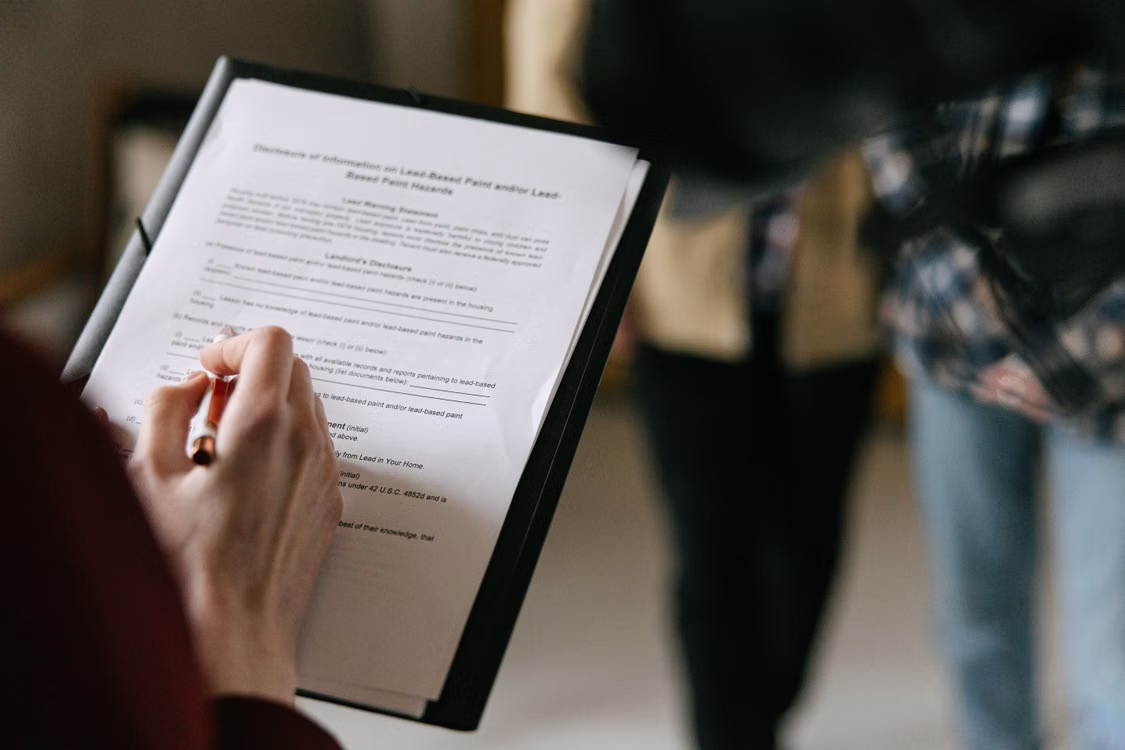
On paper, handling a security deposit sounds simple: collect it, hold it, return it. Practically, it’s one of the most regular ways landlords find themselves on the losing end of a lawsuit.
For Crofton and Bowie landlords, the stakes are larger than people think. Maryland law is quite clear about how deposits should be handled, and the consequences for doing it wrong can be stiff – including having to pay the tenant up to three times the amount of the deposit.
If you own a rental property in Crofton or Bowie, here are the most common reasons landlords get sued over security deposits and how to keep your property out of small claims court.
The Top 8 Reasons Landlords Get Sued
Reason 1: Missing Maryland's 45-Day Deadline
In Maryland, landlords are required to return the deposit within a certain time frame, usually 45 days after the tenant moves out, along with a written, itemized list of any deductions. Many landlords feel they have more room to maneuver, especially if they are still investigating the damage or waiting for repair estimates.
That assumption comes at a cost. You will forfeit the right to retain any or all of the deposit for justified damages if you miss the deadline. Even worse, a tenant might claim up to three times the deposit if a landlord willfully refuses to comply.
Set the move-out date as soon as it happens, and shape your inspection and paperwork procedure to that deadline – not your schedule.
Reason 2: Failing to Provide an Itemized, Written List of Deductions
Maryland won’t accept a verbal explanation or a ballpark estimate written on a receipt. The legislation mandates that an itemized, written list be delivered to the tenant's last known address or forwarding address detailing exactly what was taken and why.
A landlord who issues a statement such as “damages: $400” without itemizing the individual costs invites a dispute. If a tenant challenges the deduction and the landlord cannot demonstrate a clear paper trail, courts regularly side with the tenant.
Reason 3: Charging for Normal Wear and Tear
This is one of the top causes of lawsuits filed by tenants. Landlords don’t get to establish that line, and Maryland law makes a clear distinction between damage and natural wear and tear. Faded paint, worn carpet in heavy activity areas, tiny nail holes, and general aging of fixtures are all considered regular wear and tear, not harm a renter is financially responsible for.
Landlords who repaint or relay flooring after every tenancy and claim it on the deposit are on thin ice unless they can show the wear was more than expected for the length of the tenancy. Take photos of the unit at move-in and move-out to determine actual damage from normal wear.

Reason 4: Skipping the Move-In Inspection
Without a recorded move-in condition, a landlord has no basis for comparison at move-out. This leaves you in the situation of having to prove the damage happened during the tenancy and not prior. Maryland courts normally compel landlords to allow tenants to be present for move-in and move-out inspections.
Landlords who ignore this stage, or who do it quickly without written notes or images, often find they cannot justify deductions when a tenant pushes back. One of the simplest forms of legal protection is a full, dated, documented inspection at the outset of every lease.
Reason 5: Not Holding the Deposit in the Required Account
Maryland requires landlords to keep security deposits in an interest-bearing escrow account, and tenants are entitled to interest on their deposit when it's returned. Landlords who deposit the funds into a general operating account or forget to pay out the required interest are technically violating the law even if every deduction is otherwise fair.
This is an easy rule to overlook, especially for landlords managing just one property, but it's one tenant attorneys check for first when a dispute arises.
Reason 6: Withholding Funds Without Proof
Even when damage is real and deductions are justified, landlords can still lose a case if they can't back up the charges. A single line reading "carpet replacement" isn't enough. Courts want to examine invoices, receipts, or itemized charges as documented, related to the condition of the unit.
Landlords who guess at expenses, round up “just in case," or reuse the same repair estimate on many units are putting themselves at needless danger. Keep all receipts pertaining to a specific unit and specific tenant.

Reason 7: Sending the Notice to the Wrong Address
Even a landlord who does everything else correctly can run into trouble here. If a tenant provides a forwarding address and the landlord sends the itemized deduction notice to the old rental address instead, the notice may not count as properly delivered, effectively putting the landlord back at square one on the 45-day clock.
Always confirm the tenant's forwarding address in writing at move-out, and send the required notice by a method that creates a delivery record, such as certified mail.
Reason 8: Treating the Deposit as Rent Owed
Some landlords assume they can simply apply the security deposit toward unpaid rent without following the standard deduction and notice process. While unpaid rent can be a legitimate deduction, it still has to be documented and itemized like any other charge.
Treating the deposit informally, without the required paperwork, opens the door to the same penalties as any other mishandled deposit.
The Bottom Line
Almost all security deposit disagreements are preventable. It’s rarely the unjustified deduction made by the landlord that ends up in court, but more often the missed deadline, lack of documentation, or informal handling that was good enough.
The rules in Maryland, and in Crofton and Bowie in particular, are complicated enough that even a well-meaning landlord can trip up without realizing it.
Having a framework for inspections, paperwork, deadlines, and written notices protects you and your tenant and is way cheaper than fighting a case.
If you feel that handling that process, in addition to all the other aspects of renting out a property, is more than you want to do yourself, Silver River Properties can assist you in managing the deposits, inspections, and tenant communication the right way from the start.